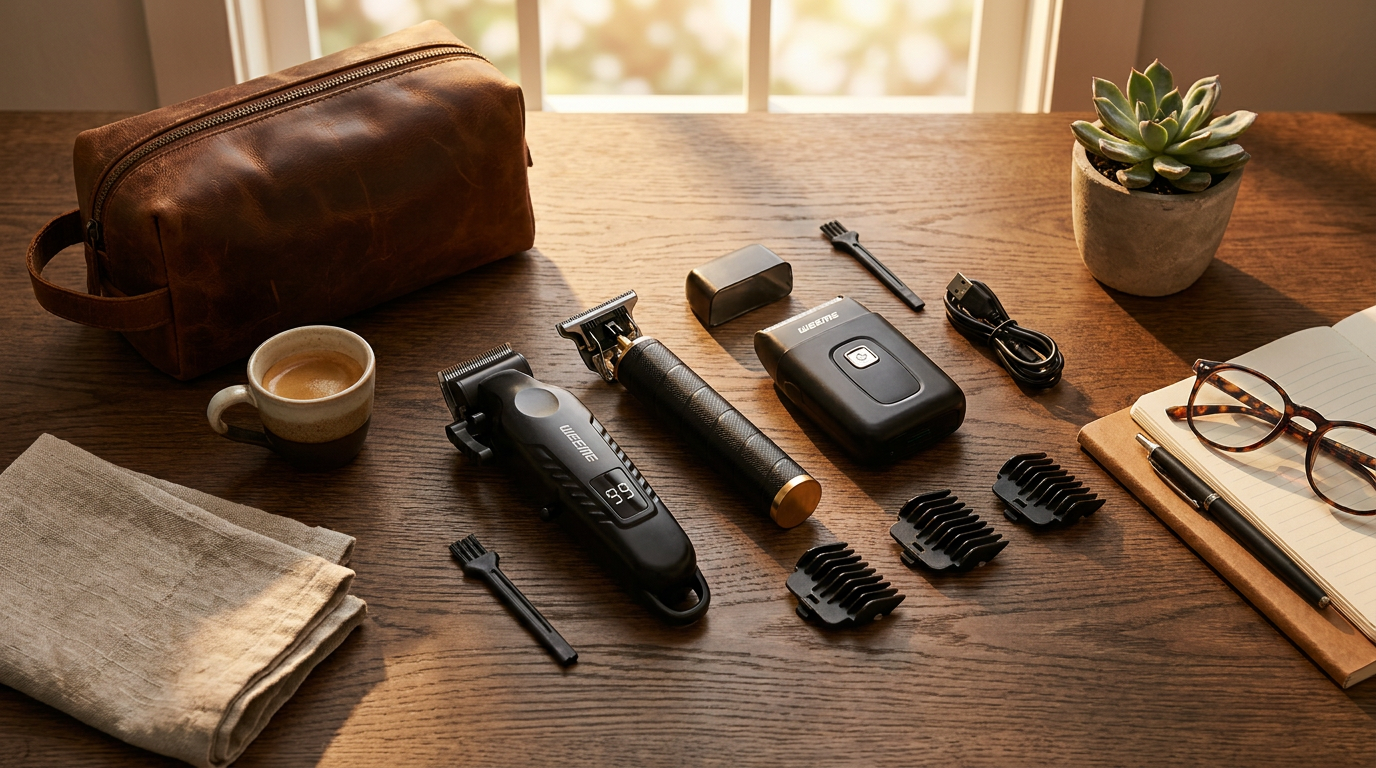
The Trimmer Combo Trap: A Cost-Benefit Analysis
 Maya ChenContributing Editor
The industry's push for massive 'combo kits' is a trap, forcing you to overpay for mediocre attachments while compromising the core motor and blade quality of the trimmer itself. While the market for the cordless rechargeable beard trimmer combo swells with all-in-one promises, the reality is a collection of compromises packaged in a convenient box. This analysis deconstructs the value proposition of these kits and presents a more logical framework for building a superior grooming toolkit.
The Compromise of the 'All-in-One' Kit
The conventional wisdom says that more attachments equal more value. This logic is flawed. A typical 15-piece kit diverts manufacturing budget away from the two components that actually determine performance: the motor and the blades. The cost of a dozen plastic guards you will never use is budget that could have been invested in a higher-torque motor that doesn’t snag or blades made from high-grade steel that hold an edge. A dedicated foil shaver will always provide a closer, more comfortable shave than a clip-on attachment, which is often an engineering afterthought designed to check a box on the packaging. This is critical for those looking to manage ingrown hairs, as a poor-quality blade or foil only exacerbates the problem.
The Hidden Costs of Complexity

Photo by Pavel Danilyuk on Pexels
Here's the part nobody talks about: every additional component is an additional point of failure. The more attachments, proprietary docking stations, and complex charging systems a kit has, the more likely something is to break. Flimsy plastic clips that hold guards in place snap. The delicate contacts on a multi-device charging cradle fail, leaving one of your tools useless. A simpler, more robust tool requires less maintenance and is less likely to fail. Understanding the fundamentals of your core device, like knowing when you should replace shaver heads, is far more valuable than organizing a drawer full of unused plastic.
A Better Approach: The Modular Grooming Stack
Instead of searching for the perfect cordless rechargeable beard trimmer combo, the data-driven approach is to build a modular grooming stack. Start with a dedicated, high-performance trimmer as your foundation. Prioritize a unit with a powerful motor and blades made from superior materials, like 440C stainless steel, known for its hardness and corrosion resistance (source on steel properties). From there, add specialized tools only as you need them—a dedicated foil shaver for skin-close finishes or a precision detailer for sharp lines. This method ensures every tool in your kit is best-in-class, not a watered-down compromise.
Is a combo kit ever a good choice?

Photo by Pavel Danilyuk on Pexels
For a user prioritizing absolute minimalism above all else, a combo kit can serve a purpose. For example, for ultralight travel, a single, compromised tool may be preferable to multiple specialized ones. However, even in this scenario, the user is trading performance for convenience. A dedicated lightweight electric shaver for backpacking often provides a better result than a multi-function trimmer of the same weight and footprint.
How can I tell if a trimmer has a quality motor?
Manufacturers of high-quality trimmers are not shy about their specifications. Look for direct-drive magnetic or brushless motors, which offer superior torque and longevity compared to cheaper pivot or rotary motors. They will often list RPMs (revolutions per minute), typically in the 7,000-10,000 range for professional-grade tools. If a brand buries motor specifications or fails to mention them, it is a significant red flag indicating the component was a cost-cutting measure.
I'll change my mind when a 'combo kit' is released where the core trimmer features a brushless motor and cryo-treated steel blades, and every 'attachment' is a fully functional, independently powered tool that docks into a central charging system. Until that day, the modular approach remains the only logical path to superior grooming.